5 Reasons Why Every Business Should Have a Strategic Plan

Rick_E_Norris_An_Accountancy_Corporation_5_Reasons_Why_Every_Business_Should_Have_a_Strategic_PlanSome great TV comedy moments were achieved during the David Letterman shows when he did the top ten lists. Some examples were: “Top ten least popular Broadway Shows: #10, Oprah-homa! ,” “Top ten least-loved Christmas Stories: #9, The Sweatiest Angel ,“ and “Top ten courses for athletes at SMU: #10 Subtraction: Addition’s Tricky Pal.”

Letterman’s writers and producer must have had a strategy when creating this idea, just like a business owner should have a strategic plan when running a business.  If you are a small business owner without a strategic plan, here are the top five (not ten, because we’re on a budget, here) reasons why you should have one:

  1. Businesses without a plan probably lack a purpose: Why does your business exist?  Just to make money doesn’t cut it.  Sure, we are in business to make money, but each business must also have a purpose.  This purpose should infuse all business practices and should be obvious to clients. For example, if your business purpose is to bring integrated wireless technology to small businesses at an affordable price, your prospects must know that.
  2. Businesses without a plan probably lack a vision: Instead of dream, strategize. Dreaming is a vision with no road to the rainbow.  Strategy is dreaming using realistic facts concerning yourself and your industry.
  3. Businesses without a plan probably lack a direction: You may think you know where you are going, but can you imagine where your business will be in ten or twenty years?  Small business owners usually cannot see past the end of the month, or worse, past the next pay date.  You may have a vision, but there are four horizons.  Which horizon are you moving toward?
  4. Businesses without a plan probably lack a culture which supports change: Owners cannot change a company unilaterally. They need to foster a culture that flexes with change in the direction of the vision.  If business owners cannot design a plan, they cannot communicate it to their employees, and therefore, they cannot execute it.
  5. Businesses without a plan probably lack meaningful tactics: If you don’t know where you are going, any tactics you establish will get you there.  Businesses usually focus on tactics (how to do something), as opposed to strategy (where they are going).  Therefore, the tactics are set up in a void.  Just doing things, like increasing your advertising budget, is not strategic planning. There are many steps you must place together before implementing your tactics and establishing your metrics to measure them.

Small business owners must go through their own top 5 (or 10) lists when creating their strategic plans.  If they don’t, the end result with be like a joke without a punch line.

(Reprinted from Money for Lunch–September 16, 2014)


https://www.moneyforlunch.com/5-reasons-why-every-business-should-have-a-strategic-plan-2/


Don’t use a Pineapple Upside down Cake Strategy to Increase your bottom line

Rick_E_Norris_An_Accountancy_Corporation_Don't_Use_A_Pineapple_Upside_Down_Cake_Strategy_To_Increase_Your_Bottom_LineHave you ever baked a pineapple upside down cake? It was one of my favorite desserts as a kid. You start the recipe with laying pineapple rings and cherries on a brown sugared baking pan base.  You then pour the batter over this sweet foundation before placing it into an oven to bake.  When you turned the baked cake over on a plate the pineapple is displayed on top.

Most small businesses seem to build their businesses like a pineapple upside down cake.  They start with the items that are most visible in a business, like sales, the inventory, and purchase orders, and ignore the biggest part of a business like the processes, structure, and culture.  Then they turn the business upside down expecting it to operate efficiently and to increase profits.  However, the foundation of the business (the batter) falters.  This may cause problems and decrease the bottom line.

I tell small business owners that the best way to increase your bottom line is to increase their top line.  Not cut, cut, cut your payroll and operating costs.  Oh, sure they should operate a business as efficiently as possible, but no business ever shrunk itself to greatness.

For example, let’s say a small business owner is not making as much money as she wants.  So, to increase her bottom line, she “lays off” a couple of employees and shifts the excess work to the remaining employees.  The benefit is that she may have a more efficient company earning 10% more net profit.  The negative impact might be as follows:

  1. Culture: Working employees harder unnecessarily might disrupt employee morale.  The change also may lead to employee carelessness, quality-control issues, and theft.
  2. Processes: If the company originally operated efficiently, a reduction in the workforce could disrupt that process.  Quality control issues, again, may be affected, but not only because of a decrease of moral, but because of a process that requires “more hands.”
  3. Structure: Employees need to know their responsibilities.  A good structure (like an organizational chart), helps lay out responsibilities and accountabilities in a visual format.  When you reduce your workforce unnecessarily, you may disrupt the known chain of command, thereby creating little vacuum pockets where nobody is responsible for certain steps in the overall process.

So what is a small business owner to do to increase the bottom line?

  1. Act while business is booming: Don’t wait until there is an economic downturn before taking action to increase your business size or increase profits.
  2. Think Strategically: The example above demonstrates the pitfalls of tactically thinking, as opposed to strategically thinking.  Strategic thinking is what to do, tactical thinking is how to do it.  A business should design and implement a strategic plan that projects to ten or twenty years.
  3. Build from the unseen: As shown above, the underlying processes, structure, and culture were ignored when the business owner decided to increase her net profit.  Start with what is not seen in a business and make that solid before moving on to more obvious tactics.  Strategically set tactical pieces in motion.

With a growing business, you can have your cake and eat it, too, but you have to make sure you bake it properly.

(Reprinted from Money For Lunch–September 16, 2014)

https://www.moneyforlunch.com/dont-use-a-pineapple-upside-down-cake-strategy-to-increase-your-bottom-line-2/


“Where There’s Smoke, There’s Fire” (But What if You Can’t See the Smoke?)

Rick_E_Norris_An_Accountancy_Corporation_Where_There's_Smoke_There's_Fire_But_What_If_You_Can't_See_the_SmokeAs a kid riding through the southern Sierra Madre, my uncle Jim Smith used to point to a brush fire in the distance and say, “Where there’s smoke, there’s fire.”  Now to a kid, that seemed like stating the obvious, but as I grew older, I understood what he was trying to teach us.

That meaning of the adage was that sometimes you only see the effects of a problem and not the cause.  The smoke, which has a lethal threat of its own, only signaled a more serious problem that had to be addressed. Sure, if the wind changed directions, then the smoke would not be blowing across our path, problem solved…right?  Obviously not, the changing wind would just push the problem into another direction, maybe with more dire consequences.

Another type of signal may also indicate a good cause, or an opportunity.  For example, if the brush fire smoke turned white, you would assume that the fire crews were getting the upper hand.

A McKinsey Quarterly article, Tapping the power of hidden influencer’s by Duan, Sheeren, and Weiss discussed at tool that social scientists use to identify sex workers and drug users can also help senior executives find the people most likely to catalyze, or sabotage organizational-change efforts.

Now this lines up real nicely to Jim Collin’s concept of “getting the right people on the bus” to enable a company to move forward before the strategic plan is in place.

Duan posses the challenge of how company leaders can identify certain people beforehand to harness these individuals’ energy, creativity, and goodwill that will benefit the company.

The article stated that, “One way we’ve found is “snowball sampling,” a simple survey technique used originally by social scientists to study street gangs, drug users, and sex workers—hidden populations reluctant to participate in formal research. These brief surveys(two to three minutes) ask recipients to identify acquaintances who should also be asked to participate in the research. Thus, one name or group of names quickly snowballs into more, and trust is maintained, since referrals are made anonymously by acquaintances or peers rather than formal identification.”

This method lays out four principles to tap the power of hidden influencers:

1. Think broad, not deep.

2. Trust, but verify

3. Don’t dictate—cocreate

4. Connect the dots.

These are good points, but the challenge is to implement them.  Too many management level persons set a strategy in place, but delegate it to others to implement.  A detailed implementation plan must be designed with weekly communication and accountability.  Even though you know “where you are going,” you still have to steer the car and add fuel.  Stepping up as a leader is one thing, delegating and managing the tasks to the individuals you identified is another.

If you don’t execute your strategic plan with the right people, you will see smoke.  And that smoke could be a raging fire that can cripple the whole process.  This process discussed in article helps a manager to see the smoke of a fire that has not yet taken place.  However, once the project has begun, all those involved should be diligent to spot smoke from a distance.


Sailing Strategic In Order to Avoid Mutiny or Running into the Rocks

Rick_E_Norris_An_Accountancy_Corporation_Sailing_Strategic_In_Order_to_Avoid_Mutiny_Or_Running_Into_The_RocksAt nine years old, my cousin Bill and I learn to sail and eight foot sailboat that his dad made.  The first thing  that intrigued me was that you usually don’t sail a boat in a straight line to your destination. No, you “tack” back and forth zigzagging so the the sail is always facing the wind.  Yet, you had one eye over the bow, and one eye on the distant horizon that may at 45 degrees to the boat’s bow.

The article in the McKinsey Quarterly, Building a forward-looking board by Casal and Caspar reminded me of the sailing because the article alert board members that they are spending too much time watching the direction of the boat, and the not the horizon that they should try to attain.  According to them, ” Directors still spend the bulk of their time on quarterly reports, audit reviews, budgets, and compliance—70 percent is not atypical—instead of on matters crucial to the future prosperity and direction of the business.”

Now this insight is not different than what I have written about small and medium-sized businesses and their inability to strategically plan for the future.  But the article did impress me with the future-minded chairman who must strategically create the board.  The article states:

“Too often, vacancies on a board are filled under pressure, without an explicit review of its overall composition. An incoming chairman should try to imagine what his or her board might look like, ideally, three years from now. What kinds of skills and experience not currently in place will help fulfill the company’s long-term strategy? What, in other words, is the winning team? A willingness to look ahead expands the number of candidates with appropriate skills and heightens the likelihood that they will sign up if and when they become available.”

This concept is very similar to a Jim Collin’s mantra of “to get the right people on the bus” before you start strategizing.  In other words, don’t focus on the future if you don’t have the personnel to help you envision it.

As a CPA firm, we have to look at the short term and historical aspects of a business in order to advise our clients from a managerial aspect.  However, once we are satisfied with the state of the “books,” we turn our eyes to the long-term and focus on the distant horizon.  Then once we assist the client in  developing the long-term strategy, we run our eyes along the path from today to the horizon and establish benchmarks.  As CPA’s we are in the proper position to monitor the company in light of these benchmarks to insure that the company is moving in the right strategic direction.

CPA firms usually don’t provide this service for small and medium-sized businesses because CPA firms usually only look historically at the financial statements and prospectively for only a few years.  The CPA industry has to understand that they are wasting a vital role on items that will only benefit clients in the short run, if at all.

The same is true for company boards.  Talent is wasted when focused on only short-term goals and endeavors.  With the quick-moving world of technology, today, CPA s and board members must not focus on only their shoe laces.  These types of businesses will be run over by those companies who include the horizon in their peripheral vision.

Strategic Planning Opportunities and Resurgence of US Manufacturing through 3-D Printing

Rick_E_Norris_An_Accountancy_Corporation_Strategic_Planning_Opportunities_And_Resurgence_Of_US_Manufacturing_Through_3-D_PrintingMy wife is a Sociology Professor at University of California, Irvine specializing in labor unions.  One of her books, Talking Union discussed the struggle between labor and management at the Ford River Rouge plant.  Back at that plant in early to mid 20th century, Henry Ford implemented a strategy to control the supply chain, not just to build cars, but to control the manufacturing of raw materials like steel, glass, and rubber.  Those days disappeared for a variety reasons, one being that US workers demand a descent wage and working condition as opposed to many of their contemporary global counterparts who didn’t have either.
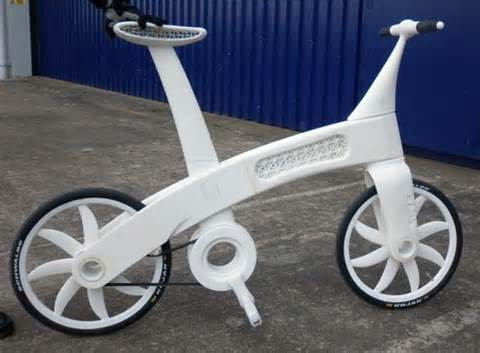
But a US manufacturing boom may be on the horizon, and opportunities for businesses of all sizes should be included in their ten or twenty year horizons.  I came across an article on Motley Fool by Steve Heller who pushed investing in 3-D printer manufacturers.  The trend will be no more waiting, ordering, inventory management when many parts can be made on demand.  These parts can be custom clothes to body parts to airplane engine parts.  The article stated that the only limitation was the imagination of the end user.

Another article, The 4 Technology Trends That Could Bring Back US Manufacturing by Jessica Leber echoed the message but from a US manufacturing point of view.  She includes 3-D Printing as one of these trends writing, “It used to be that a company would have to invest hundreds of thousands of dollars in building a production line before making one single cheap widget. Now, with additive manufacturing (a term which includes 3-D printing technologies), companies can start to design distributed manufacturing operations that ‘scale with the market they serve,’ says Schmidt. Making things ‘at the point of use or point of need’ will help small companies that make products in the U.S. stay competitive.”

When you develop and implement a strategic plan, I always say to keep one eye on the path in front of you, and one eye on the horizon. Too many of our small business clients ignore the second part and only ask, “What are my sales today, and do I have enough cash to make payroll on Friday?”  They completely lack vision because they do not design a strategic plan, and worse off if they do, they don’t steadily implement it.

Almost every business that is supplying some product to their customer, should include these manufacturing technologies in their strategic plan.  Sure, it may not materialize for five years in their industry, but to position your company to be ready will label you as an industry leader, not follower.  Even now, your strategic plan can include tactics for you to purchase a small 3-D printer for smaller parts that are in high demand.

3-D printing is just one of many technologies that can assist small and medium-sized businesses in their strategy.  You can wait in the car as the technology train passes by, or you can wait at the train depot and jump on.  You just have to look down the tracks and position yourself.