Dislodging Nipples in a New Market

Rick_E_Norris_An_Accountancy_Corporation_Dislodging_Nipples_In_A_New_MarketDuring my teenage years, I worked for my step-father’s plumbing company. Of course there were times that I would get the disgusting jobs like going to the deepest part of a sewage spill to place a sub-pump.   But at times, I would learn different ways to use common tools and objects.  For example, sometimes we would repair sprinklers. like the times a sprinklerhead with a galvanized nipple (not plastic like today) was broken off. A portion of the nipple would be left in the fitting.  To remove and replace this nipple, we would use something very unusual…a large (1/2 inch?) drill bit.  I would pound the drill bit into the broken nipple and turn is with a pipe wrench unscrewing the nipple out of the fitting.

And within a couple of years, somebody adapted the shape of these drill bits to do such a job, adding a handle and such to make it a specialized device to remove broken nipples.  IT was called an EZ out tool.  It reminded me of my friend Seena Sharp where in her article of Sharp Insights wrote, ” The question is not just who needs what you are selling, but who else needs what you’re selling.” How can you find them? How can they find you?”

In other words, in my example, a drill bit company could have adapted their current product to tackle a new market that didn’t even remotely connect with drilling holes.  To understand this though, the drill bit company would have to understand the customer’s needs of a whole different market, and the current trends of that need.

But the analysis doesn’t stop there.  In addressing the current trends, the drill bit company would have to understand the changing industry.  If they were to discover that the sprinkler industry was converting from galvanize to plastic, then their drill bit nipple remover could reach obsolescence before they recouped their investment in R & D.

Another trend could be that people are moving from sprinklers to drip systems.  These types of market analysis can be the difference between a company blasting into a new market with successful  results, and a company arriving too late to an industry that has changed.

Before moving into another market, understand it.  Then develop your strategies.

The Strategy of Ordering the Larger Pie

Rick_E_Norris_An_Accountancy_Corporation_The_Strategy_Of_Ordering_the_Larger_PieToday, I had breakfast with my friend, Narciso.  Narciso’s company deals in commodities.  Now, I can’t really tell you much about what he deals in because I don’t want to compromise his strategy or position in his industry.  However, his commodity has both financial and tax rewards.

Before continuing, here is a little history.  Prior to the Reagan tax acts, tax-shelters were the name of the game. Now, I am not talking about moving money offshore to the Netherlands Antilles, or buying  a pallet full of Bibles at a deep discount so you can donate them at FMV 12 months later.

No, I am speaking of apartment buildings, commercial strip malls, and commercial buildings carrying historical credits.  Most of these “tax shelters” evaporated with the dodo bird since they were “passive losses” and could not be offset against your active income like W-2s and businesses.

However, there are some investments that are not restricted by passive losses, and are still included in investment portfolios of the very wealthy.  The problem with the previous paragraph are the last two words, “very wealthy.”

So many investment salespeople tend to limit their strategy to a very small segment of our population who control 99% of the wealth.  The salesperson’s rationale is,  Why spend 10x more energy to get ten people to invest, when I can just work on one person who is 10x more wealthy?”

With the improving economy, I believe this is a poor strategy for these reasons:

  1. Many competitors are jockeying for this small market.
  2. If one of your large clients discontinue with your company, you most likely will feel the effect.  Therefore, your risk is concentrated.
  3. There may be a number of people in the top 90% that can use this product is delivered to them in an understandable way.

This reminds me of Jim Collin’s comments of why Nucor became the greatest at steel manufacturing.  They started with new technology, a new internal culture and moved from producing the lowest gauge of steel to the best.  Their competitors like Bethlehem Steel abandoned the lower markets, and as the Nucor tides rose, they also dominated the higher grades of steel.

In the same way, by developing a marketing strategy that addresses the top 10% of our population, instead of just the top 1% for this commodity tax shelter, the sales manager would be creating a “large pie.”  According to Dr. Stanley Abraham’s book, Strategic Planning, this marketing analysis would incorporate this attribute of target market, with other attributes like degree of penetration, customer needs, and distribution channels.

Business should not be content with fighting for a larger share of a smaller pie.  Many times, this strategy reduces all competitors to a commodity because the target market cannot distinguich one competitor’s offering to another competitor.

A Revelation: Bad Strategy of the Four Horsemen (Part 4 of 4)—“Bad Strategic Objectives”

Rick_E_Norris_An_Accountancy_Corporation_A_Revelation_Bad_Strategy_Of_The_Four_Horsemen_Part_4_Of_4_Bad_Strategic_ObjectivesThis is my last of a four installment treatise.  Previously, I mentioned how Knute Rockne compiled four sophomore football players in the Notre Dame backfield who became football lore. The Four Horsemen of Notre Dame destroyed almost any defense they faced from 1922 to 1924, only losing twice to Nebraska.
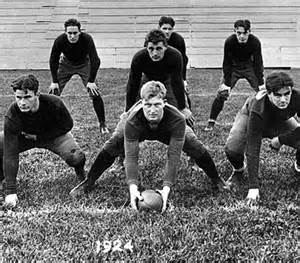
In a strange way, their image came to me when reading Richard P Rumelt’s Good Strategy/Bad Strategy and his four major aspects of bad strategy. Rumelt writes that you can detect bad strategy out of four hallmarks: “fluff, failure to face the challenge, mistaking goals for strategy, and bad strategic objectives.”

According to Rumelt, ” A strategic objective is set by a leader as a means to an end.  Strategic objectives are ‘bad’ when they fail to address critical issues or when they are impracticable.”

I recall reading about a problem with the Carter presidency.  In that article, the commentator claimed that President Carter tried to micromanage programs and directives he set in motion.  I cannot tell you what transpired between Carter’s high level strategy of setting goals (over all values and horizons) and the objectives that were implemented to reaching those goals.  But if  he orchestrated objectives, he violated good strategic planning practices.  A good leader does not have to define specific objectives.  They should direct the company from the 30,000 feet level and allow his/her senior and middle management to design the objectives that will allow the strategy to move forward.  These objectives should be measured with metrics.  Partially based on Rumelt’s book, here are some tips:

  1. Don’t mistake a long list of things to do and lable them strategies.  For example: Don’t list a diverse set of objectives that has no cohesiveness towards a specific horizon.
  2. Don’t establish a strategy that is so obscure or outlandish that your company cannot design actions to get to your strategic objectives.  For example:  You want your company to be the best in the world at producing movies.  OK, how?
  3. Don’t shift strategic objectives in midstream without giving them a chance to develop.  This could mean that you did not establish a good objective from the outset.

This four part article can apply to any industry and strategy.  It can even apply to career-based strategic plans.  I have been applying these business concepts to artist’s careers, non-profits, and even a professor’s software vision.  Good strategic planning can open up ideas and doors that are hidden in the shadows of success.

A Revelation: Bad Strategy of the Four Horsemen (Part 3 of 4)—“Mistaking Goals for Strategies”

Rick_E_Norris_An_Accountancy_Corporation_A_Revelation_Bad_Strategy_Of_The_Four_Horsemen_Part_3_Of_4_Mistaking_Goals_For_StrategiesIn our last two installments, I mentioned how Knute Rockne compiled four sophomore football players in the Notre Dame backfield who became football lore. The Four Horsemen of Notre Dame destroyed almost any defense they faced from 1922 to 1924, only losing twice to Nebraska.
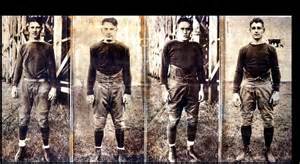
In a strange way, their image came to me when reading Richard P Rumelt’s Good Strategy/Bad Strategy and his four major aspects of bad strategy. Rumelt writes that you can detect bad strategy out of four hallmarks: “fluff, failure to face the challenge, mistaking goals for strategy, and bad strategic objectives.”

In this issue, we will discuss the third horseman, “mistaking goals for strategies.” Many bad strategies are just statements of desire rather than plans for overcoming obstacles.  Many companies express their desires as goals, not strategy.   For example:

  • We will be the industry company of choice
  • We will grow our revenues 10% per year
  • We will sustain a profit margin of 15% per year

The problem with this kind of pseudo strategic thinking is that it is looking at the trophy, not the method to earn it.  A simple example is using two components of the SWOT tests (strengths, weaknesses, opportunities, and threats.)  What strengths and opportunities are you going to use to build a strategy to get to those goals?

If you have a difficult time distinguishing a goal from a strategy, always think of a tightrope walker.  Their goal, or vision, is to get to the other platform.  Their use of a wire, training, a balancing pole, and other aspects feed into the overall strategy that will get to the other side.

But do we ignore numbers?  Absolutely not.  Metrics work as milestones or sign posts along the way.  They can have the effect of measuring the strategy and altering tactics that can get you to your vision.  But for these metrics to mean something there has to be an action that creates the conditions that will allow the company to reach its visionary goals.

Performance goals have little to do with strategy.  But the real challenge is thinking strategically.  Take the military, for example. Would this be a proper response by General Eisenhower to President Roosevelt in his strategy to defeat the Germans in WWII?  “Mr. President, we plan to defeat the Germans in six months.”  His response stated a goal, but not a strategy to getting to that goal.

The same can be said on how individuals “strategize.”  In Los Angeles, a singer may say, “I want to get a recording contract.”  Or, “I want to earn five platinum records by time I am 35.”  These are not strategies, they are goals.  The challenge is to go through the process of creating a basic roadway.  This roadway joins where you are now to where you want to be.

A Revelation: Bad Strategy of the Four Horsemen(Part 2 of 4)–“Failure to Face the Challenge”

Rick_E_Norris_An_Accountancy_Corporation_A_Revelation_Bad_Strategy_Of_The_Four_Horsemen_Part_2_Of_4_Failure_To_Face_the_ChallengeIn our last episode, I mentioned how Knute Rockne compiled four sophomore football players in the Notre Dame backfield who became football lore. The Four Horsemen of Notre Dame destroyed almost any defense they faced from 1922 to 1924, only losing twice to Nebraska.

In a strange way, their image came to me  when reading Richard P Rumelt’s Good Strategy/Bad Strategy and his four major aspects of bad strategy. Rumelt writes that you can detect bad strategy out of four hallmarks: “fluff, failure to face the challenge, mistaking goals for strategy, and bad strategic objectives.”

In this issue, we will discuss the second horseman, “failure to face challenge.”  As Rumelt pointed out, “bad strategies fail to recognize or define the challenge,”  thus preventing any chance of developing a strategy to improve it.

As as CPA, some of my clients have refused to identify a major challenge in their business.  This “ostrich head in the sand” habit always frustrated me.  These small and medium-sized business owners used many excuses to continue working in their comfort zone.  They ignored the “lit fuse.”  The fuse  ultimately led to  crises.  Les McKeown in Predictable Success, labelled this as “The Big Rut” where “the organization has lost any desire to be creative or take risks, and is instead solely focused on maintaining and marginally improving how it has done business in the past.”

The problem that seems to recur is the failure to focus on the clients’ needs.  Many strategy books discuss this point of view, but many organizations fail to see it.  In other words, they have to turn the telescope around and stop looking at themselves.  They must stop focussing on what THEY think the client need, and instead swing the telescope to point away from them.

Now, that is not to say to ignore “the elephant in the room.”  That giant inefficient product, or process, that is running the company into the ground.  But, by focusing on your customer in a strategic process, you may also see that the big expensive, inefficent elephant in your storage room will have to go.

This is why strategic planning is important to businesses of every size.  The process offers a view that many businesses fail to even consider.  A strategic plan doesn’t have to be a hundred page detail analysis with footnotes that takes a month and costs tens of thousands of dollars. Instead, a simple plan can only take a couple of hours, or if more brainstorming is needed, a couple of hours each day for a few days.  The process could lead to a new business and the pasturing of the fourth horseman.

Our next issue will discuss horseman #3, mistaking goals for strategy.

A Revelation: Bad Strategy of the Four Horsemen(Part 1 of 4)

Rick_E_Norris_An_Accountancy_Corporation_A_Revelation_Bad_Strategy_Of_the_Four_Horsemen_Part_1_Of_4Knute Rockne compiled four sophomore football players in the Notre Dame backfield who became football lore.  The Four Horsemen of Notre Dame destroyed almost any defense they faced from 1922 to 1924, only losing twice to Nebraska.

This was the image that came to me while reading Richard P Rumelt’s Good Strategy/Bad Strategy and his four major aspects of bad strategy. Rumelt writes that you can detect bad strategy out of four hallmarks: “fluff, failure to face the challenge, mistaking goals for strategy, and bad strategic objectives.”

In this first part of four, I will discuss “fluff.”  “Fluff” uses $5.00 words with vague concepts.  The industry that I have spent more than 25 years, the entertainment industry, thrives on such fluff.  When leading strategic planning sessions in this industry, I explain that “creative people” are the best equipped to forge a new business strategy.  However, I have to keep one foot in the crows nest for that verbose and esoteric creative person who can lead the session into non-existing waters.  If you plan to lead a session, don’t be afraid to ask what a person means by the buzz words they use.  It usually only takes two questions to uncover a person who is speaking just to be heard.

Fluff will spread like a plague if you let it get out of hand. Others will try to outshine the fluffer with their own fluff creating an epidemic of nonsense.  A strategy session, and a strategy should always be as concise, and substantive.  You can create a strategic plan that takes months or just hours.  But, which every you choose, it must have a direction.

“The Most Stolen Song of All Time” Could Just Be A Common Small Business Pitfall

Rick_E_Norris_An_Accountancy_Corporation_The_Most_Stolen_Song_Of_All_Time_Could_Just_Be_A_Common_Small_Business_PitfallBobby Owsinski’s  article, The Most Stolen Song of All Time is a playful little article that talks about how a common four chord progression can be use for so many pop songs starting with “Don’t stop Believing” by Journey.  For you musicians it is I, V, VIm, IV, or if you are playing on an ipad(iphone) keyboard, play F-C-Dm-Bflat. However, the chords just don’t make a song.  You need  melody, rhythm and usually lyrics.

But this isn’t so in the world of small and medium-sized businesses.  So many play the same “chords”: “What are my sales, and do I have enough money to make payroll?”   When I say this to business owners, most agree, but some think that because they are the best (or at least think they are the best) at what they do, then anything else is irrelevant.  To this comment, I recall a quote from Michael Gerber’s The E-Myth’s fatal assumption: “if you understand the technical work of a business, you understand a business that does that technical work.”

This false assumption goes hand and hand with the owner that refuses to relinquish control and delegate.  That owner does not think like an entrepreneur.  Some may never reach this mind set. This mindset is strategic thinking.  Like my friend, Dr. Stan Abraham writes in Strategic Planning, A Practical Guide for Competative Success:

The five principal dimensions of strategic thinking to consider are:

  1. How to be different
  2. Being entrepreneurial
  3. How to find more opportunities
  4. Being future-oriented
  5. Whether to be collaborative

These points hardly occur to a technical business owner imprisoning him (or her) in a timeless cycle of mediocrity.  Their whirlpool movements never get them to a destination because they don’t look for a destination.  They just churn and churn and churn until they either go out of business, or quit.

Strategic planning is the best step to take in moving downstream.  Business owners cannot play the same four chords expecting to create a new song.

Alfano the Great and the Strategy of a Spectacular Thrill Artist

My Grandfather, Louis Alfano, was Alfano the Great. Yes, all our grandfathers probably had great long tales that expanded with time, but my grandfather had proof.  He would work as a tight-rope walker in the 1920s between two buildings in Chicago.  When asked about it fifty years later, he would say, “Oh, don’t remind me.  I can’t believe that I did such a crazy thing.”
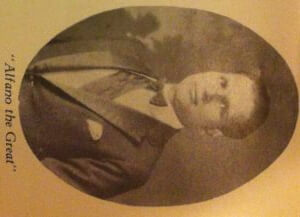
Still, ninety years later, Alfano the Great can teach us a little about strategy.  Imagine if he went through the strategic planning steps in fulfilling his vision.  I’ve pulled some steps from Johnson and Smith’s 60 Minute Strategic Plan to guide us.  Here is something like it would go:

  1. Issues: The issue that my grandfather would have to solve is how he could adequately entertain people for money without killing himself?
  2. Assumptions:  You would assume that he has some experience, talent, and good equipment.  Without these three aspects, he would not have a chance of addressing his issues.

    atheg-pic

  3. Vision:  �His horizon is to reach the other building and prove that he is the greatest spectacular thrill artist in the world .  He had to make it there in one piece without compromising the entertainment value.
  4. Beneficiaries: The biggest beneficiary was the department store that hired him to bring people to their front door.  Other stores on the street can benefited.
  5. Obstacles: Wind, distractions, or a cable break could cause failure, and what a failure that would be. These obstacles are external to him.
  6. Gauges of success: Obviously getting to the other side multiple times by foot and bicycle were the biggest indication.  Another gauge could have been the audience applause.
  7. Opportunities: Good weather was a great opportunity, expecially if the wind was not blowing off Lake Superior.  This too was an external attribute that can affect his degree of success.
  8. Strengths: He had determination, poverty, and tricks of the trade to fulfill his vision.  He said that he deflated the bicycle tires to get a better grip on the cable when crossing.
  9. Weaknesses:  Fear may have been an internal weakness.  Maybe a lack of experience, also.
  10. Strategy:  Alfano the Great’s strategy was to perform six different acts across the wire: Hand over hand; hang by his feet; a quasi-handspring; ride a bicycle to the other building; perform “arms” with a rifle, discharging it; and slide down a wire to the ground head first.
  11. Tactics: Training on the ground, rigging equipment for a higher chance of success, and obtain accurate weather forecasts.  These are some of the tactics Alfano the Great needed to be “World’s Greatest Spectacular Thrill Artist”

How do you approach the strategy for your business or life?

Give us a call if you have any questions or email us! 310-216-7632

Subscribe to Rick Norris CPA

Related Articles You Will Enjoy
You No Longer Have to Bring the IRS to Tears for a Home Office Deduction
The Strategy of the “Argo” Writer and Why You Should Take Notice
Seinfeld and the Art of Consistency

Strategy and Risk Management Without Losing the War

Rick_E_Norris_An_Accountancy_Corporation_Strategy_And_Risk_Management_Without_Losing_The_WarWhen my sons were in their early teens, we would play the game of “Risk.”  The game’s objective was for a player to dominate the world on the game board.  Your armies consisted of infantry, Calvary, and artillery. (The fact that I really own a horse did not give me  a leg (or hoof) up.  The boys were good and they conspired against me.  I could not measure the risks in my tactics, good or bad risks.

The game risk could be used as a parody for real life business risks.  The article, How to Map Your Risks, by Bugalla and Kallman  focused on such risk management.  The authors enhanced the subject by measuring threats associated with risks (traditional risk management), and opportunities associated with risks (enterprise risk management.)

These approaches are not new.  Strategists focus on both (external) opportunities and threats in contexts of a company’s (internal) strenghts and weaknesses.  The metrics associated with these risks are steps later in the creation of the strategic plan.

The article suggested a “Value Map” where probability is measured against outcome.   The authors use the following color graph:

I would quantify the colors for more accuracy, but the authors draw big circles for “ranges” of risks.  This graph would be a useful too for those clients (like entertainers) who are very visual and right brain.  Any tool that displays parts of a strategy is a good tool.

The Art of the 21st Century Certified Public Accountant in Business

Rick_E_Norris_An_Accountancy_Corporation_The_Art_of_The_21st_Century_Certified_Public_Accountant_in_BusinessTwenty-five years ago  worked in a CPA firm with a woman whose father directed orchestras for major films.  She informed me about an orchestra director secrets like the isometrics he would perform to build up his arms, the focus of his eyes, and the rhythm of his body language.  The artistic part obviously was the message he was projecting  the orchestra to play.  The “business” though, was the set of tools and discipline that he had mastered in order to project his musical vision.  Both were equally important.

When people think of a CPA, they usually think of a tax preparer, a bookkeeper, or on rarer occassions, a business specialist.  This limited view is partly the profession’s fault, but for those who are creative, the CPA profession has changed to an art.

One definiton states that “Art is any field using the skills or techniques of art.”  Or better, ” Art is the quality, production, expression, or realm, according to aesthetic principles, of what is beautiful, appealing, or of more than ordinary significance.”

Some businesses dwell in the arts, but all businesses can be run  artfully regardless of their industry.  In the past, the CPAs have exercised only a skill set to managing a business.  Like the orchestra leader, they honed in mechanics to achieve a certain end.  This is very left-brain, and analytical.  The CPA of the 21st Century is creative, right brain, though most CPAs don’t know or understand this yet.  They are a dying breed.

What 21st Century business NEEDS from a CPA is a “whole brain” approach.  Not a CPA that can just produce historical financial statements, prepare tax returns, and do payroll.  Those pieces are the musical score of  a business.  What 21st Century business needs from a CPA is the business tempo, dynamics, and feeling.  In other words the strategic plan and its execution.  So how does a CPA do this?  Pretty much by following some simple rules like any business:

  1. Focus on what the customer needs and not what you can deliver.Listen to the customer.  What pain do they have?  The CPA has the the firstaid kit to help it, but most CPAs just take out the same band-aids because that is what they know best.  By strategically addressing the client’s vision, a CPA can develop a strategy and monitor its execution.
  2. Do it today.  Like any business, a CPA should not put a client’s strategy on the back burner.  Telling the client what they did last month is going to have limited effect on how the client can grow tomorrow.
  3. Train your staff to their level of incompetency.  I have seen too much talent wasted because CPA partners refuse to use skills of their employees on all levels.  This leads to a lack of employee motivation, and reluctance to join in the CPA’s vision, and the vision of the client.  People want to “matter,” and the matter with unmotivated people is sometimes their stogy bosses.  Develop each person and the CPA firm will provide the clients with value that meets the client’s needs.

The new CPA is artful, and not just methodical.  No other profession sits at the core of business decisions in almost any industry than the CPA.  But, the old style CPA will not adapt and will die off as they retire.  Already the market is shrinking for the traditional services with new tax software, better bookkeeping software, and encroaching professionals from other disciplines.

The new breed is artfully right-brain, and methodically left-brain, and so are our clients.