
 This is my last of a four installment treatise. Previously, I mentioned how Knute Rockne compiled four sophomore football players in the Notre Dame backfield who became football lore. The Four Horsemen of Notre Dame destroyed almost any defense they faced from 1922 to 1924, only losing twice to Nebraska.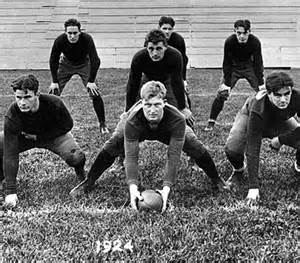
In a strange way, their image came to me when reading Richard P Rumelt’s Good Strategy/Bad Strategy and his four major aspects of bad strategy. Rumelt writes that you can detect bad strategy out of four hallmarks: “fluff, failure to face the challenge, mistaking goals for strategy, and bad strategic objectives.”
According to Rumelt, ” A strategic objective is set by a leader as a means to an end. Strategic objectives are ‘bad’ when they fail to address critical issues or when they are impracticable.”
I recall reading about a problem with the Carter presidency. In that article, the commentator claimed that President Carter tried to micromanage programs and directives he set in motion. I cannot tell you what transpired between Carter’s high level strategy of setting goals (over all values and horizons) and the objectives that were implemented to reaching those goals. But if he orchestrated objectives, he violated good strategic planning practices. A good leader does not have to define specific objectives. They should direct the company from the 30,000 feet level and allow his/her senior and middle management to design the objectives that will allow the strategy to move forward. These objectives should be measured with metrics. Partially based on Rumelt’s book, here are some tips:
- Don’t mistake a long list of things to do and lable them strategies. For example: Don’t list a diverse set of objectives that has no cohesiveness towards a specific horizon.
- Don’t establish a strategy that is so obscure or outlandish that your company cannot design actions to get to your strategic objectives. For example: You want your company to be the best in the world at producing movies. OK, how?
- Don’t shift strategic objectives in midstream without giving them a chance to develop. This could mean that you did not establish a good objective from the outset.
This four part article can apply to any industry and strategy. It can even apply to career-based strategic plans. I have been applying these business concepts to artist’s careers, non-profits, and even a professor’s software vision. Good strategic planning can open up ideas and doors that are hidden in the shadows of success.
Thank you for reading.
-The LA CPA
Get your stories down on video or audio before he’s gone and his stories are gone with him. This kind of history is invaluable. Thanks for sharing.